Sunday, February 19, 2017

Weekly blog 2/19/17

Image: 

Image link: https://m.shutterstock.com/search?q=ecosystem

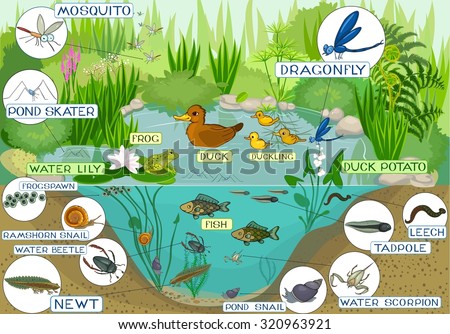
Summary: This week we did a worksheet on consumers, decomposers, and scavengers. There are also producers like plants which provide oxygen. We had a substitute and we did the worksheet. On the worksheet we had to catagorize animals and plants into consumers and producers. Some consumers are omnivores, herbivores, and carnivores. Then decomposers like bacteria and fungi decompose dead things which makes the soil fertile. Lastly scavengers are similar to decomposers but they're animals or organisms that eat other dead organisms. Some examples are vultures and hyenas. We also learned about Abiotic and Biotic factors in an environment. Abiotic is a nonliving organism and Biotic is a living organism. Some examples of Biotic are plants and animals. Then some Abiotic examples are water, the sun, and dirt.

SP4: Analyzing and interpreting data
Scientific investigations produce data that must be analyzed in order to derive meaning.


Did you create a graph, table, drawing, etc. of the data you obtained in an experiment?

We created a graph and went outside. When we went outside we labeled things that we saw outside into Biotic and Abiotic.

Sunday, February 12, 2017

Project blog 2/12/17

Image: Image result for fennec fox

Image link: http://kids.nationalgeographic.com/animals/fennec-fox/#fennec-fox-hole.jpg


Summary: This week we presented our super hero projects where we chose 1, 2 or 3 animals into a superhero and create them. Mine was a fennec fox and a weasel. I learned about other peoples superheroes and powers. I also learned that if you eat unhealthy then you can get cancer. In our superhero projects we had to do epigenetics and what our super hero child would be like. I learned that if the mom was unhealthy during pregnancy then the baby would be unhealthy. Also if the child has a high stress job then they could be at risk for maybe depression. I also learned about some animals that people used for their superheroes like the platypus with the power of poison.

Backwards - looking:
On the subject I didn't know much about the animals that I had to choose for my superhero. I also didn't know about punned squares or epigenetics. The only thing I pretty much knew was when we had to improve the villain I already knew some of the body systems, their functions, and what organs were in the system.

Inward - looking:
What I found frustrating about this project was that we had to draw a lot and I'm not very good at drawing. I found everything else fine though because I'm better at filling things in than drawing things. It's also because I didn't really dislike anything about the project.

Outward - looking:
The first grade I would give is an A, then a B+, and lastly a B. I would give it an A because the information on the super villain organs in my opinion was good. Then I would give it a B+ because I think that the epigenetics was good but not very good. Lastly I would give it a B because my drawings looked good but they were also pretty bad in my opinion.

Forward - looking:
I'd like to improve on my drawings and to put more detail on my sentences. I want to improve my drawing because if we do another drawing project then I want it to be better. Then lastly I want to put more detail into my sentences because then they'll be more descriptive.

Sunday, February 5, 2017

Weekly blog 2/3/17

Image: Image result for skeletal left and right arm


Summary: This week I learned that about your leg bones, arm bones, the kidneys, and the lungs. Your leg bones help you stand and if you didn't have them you wouldn't be able to stand. Some bones in your legs are the tibia, the fibula, patella, and femur. Then your arms help you grab things and block things. Some parts of your arm are called the radius, humerus, and the ulna. Then your kidneys take away waste from your blood and then it turns into urine and goes into the bladder. Some things connected to the kidney is the bladder, the bladder neck, and the ureter. Lastly the lungs which help you breath by separating oxygen from carbon dioxide. The lungs help you breath in oxygen and breath out carbon dioxide. Some things related to the lungs is the diaphragm, trachea, bronchi, alveoli, and bronchioles.

SP2: Developing and using models
Models make it possible to go beyond things you observe and simulate a world not yet seen. Models enable predictions of the form “if…then… therefore” to be made in order to test hypothetical explanations.

Did you build a model, draw a picture, created a concept map, etc?

Yes I drew a picture of the lungs, kidneys, arm bones, and leg bones and I drew an improved/nefarious version of each for my super villain.

Friday, January 27, 2017

Weekly blog 1/27/17

Image: Image result for origin genetics


Summary: This week we needed to write a story about our superhero's origin. I learned about how people combine DNA of animals by adding and maybe even shooting a metal pellet at an animal. There are many more but for my superhero I added letters into the letter code of the animal. My superheros original letter code was FF but then it changed into FFHW because if my superhero was originally a fox and human and weasel DNA got into my superhero that's what the code would be (FFHW). Then as for the metal pellet that's how the DNA got into my superhero. Scientists put weasel DNA on a metal pellet and the metal pellet would penetrate my superhero which makes the weasel DNA rub off into the DNA strands of my superhero. 

SP1: Asking questions and defining problems
A basic practice of the scientist is the ability to formulate empirically answerable questions about phenomena to establish what is already known, and to determine what questions have yet to be satisfactorily answered.

Did you ask a scientific question?

Yes because when we had to create our origin story for our superheros there were requirements so I had to wonder or ask myself how and what would happen to my superhero and what process would it take for them to become a superhero. Such as adding into the letter code and penetrating an animals skin to combine DNA.


Sunday, January 15, 2017

Weekly blog 1/15/17

Image:


 Image result for punnett square


Summary: This week I learned about what a homozygous is, what a heterozygous is, and how to make a punnett square. Homozygous means that when 2 alleles in 1 pair are the same such as AA or aa. Then heterozygous is when 2 alleles in 1 pair are different. Some pairs that are heterozygous can be Aa, Bb, or Cc. Then a punnett square is when you have a square and you break it into 4 sections. Then on the 2 sections on the top you put the alleles of  the dad and on the left side you put the alleles of the mom. An example is if the dad's genes are DD and the moms genes are dd. Then the combinations in each square would be Dd. The reason is because a child doesn't just get 1 gene from 1 parent, the child get's both genes but depending on whether the gene is dominant or recessive the child will most likely have the dominant trait.

SP2: Developing and using models
Models make it possible to go beyond things you observe and simulate a world not yet seen. Models enable predictions of the form “if…then… therefore” to be made in order to test hypothetical explanations.

Did you build a model, draw a picture, created a concept map, etc?

Answer: In class we did a few punnet squares in our notebooks and we had to do one for our superhero's child. To determine what genes the child would have.


Sunday, January 8, 2017

Weekly blog 1/8/17

Image: 


Summary: This week I learned what a genotype, an allele, and a phenotype are. A genotype is a pair of alleles. A phenotype is a characteristic such as personality, hair color, eye color, how tall or short you are, etc. This also applies to animals and plants as well. Then an allele is the traits that you might have before you're born. I also learned about dominant traits and recessive traits. Dominant traits are when you're most likely to get because they occur more often in your family. Then a recessive trait is when your less likely to get a trait because it's unique or it doesn't occur much in your family.

SP1:Asking questions and defining problems
A basic practice of the scientist is the ability to formulate empirically answerable questions about phenomena to establish what is already known, and to determine what questions have yet to be satisfactorily answered.

Did you ask a scientific question?
Yes we answered questions about genetics and DNA on a google doc. Some questions were what are genes, what's a phenotype, what's an allele, and what's a genotype.


Sunday, December 11, 2016

Charity fair project blog 12/11/16

Image:

Summary: During the charity fair I learned what a revenue is and what an expense is. A revenue is the profit of something and an expense is the cost or price of something. Then there's a financial report which has the report of 2 years in both expenses and revenues. In a charity it may also say on the financial report the donations and to where the money goes. There could be a financial report for every year unless the year isn't over or if the older ones are harder to find.

Backward - Looking
I knew some of the requirements of the charity fair before I started it because I've done it before. Some requirements I knew I had to do were a cost and profit, a charity, how to make your product, and you could be in a group or you could do it solo. Something that we didn't do this year though was where your materials to make your products came from and how they traveled to the store/to you.

Inward - Looking
What I found frustrating in the project was that we were making food but I didn't know how to make the food (jam rolls) so I had to use the instuctable. I didn't know how to make the jam rolls that much so it took me a while to finish making them. We also decided to bring the product during the charity fair so I had to get to the classroom my group was in early to put them in the boxes and tie ribbon on the boxes. But overall I think this years charity fair was good.

Outward -  looking
A grade I would give the collaboration for this project is a B+ because I feel as if I didn't do much in this project. Then a grade I would give our presentation is an A- because I think our script was good but we weren't timed very well with our slides. Although an overall grade would be an A or a B.

Forward - Looking
A goal I have for the next charity fair is to help my group more with the cost and profit. I also want to help my group more overall so that they don't do all the work. I also want to do another food product but a food item that I know how to make.