Thursday, March 30, 2017

Weekly blog 3/30/17

Image: Image result for the periodic table


Summary: This week we learned about the peridoc table and what an atomic number is, what an atomic symbol is, what an atomic mass is, and how to find the amount of neutrons in an element. An atomic number is what signifies how many protons and electrons an element has. An atomic symbol symbolizes an element like O is oxygen and an atomic mass is how many ions are in an element. Then you need to find how many neutrons are in an element. You first find the amount of protons and electrons in the element by looking at the atomic number assuming the element is neutral. Then you find the atomic mass and substract the number of protons from the atomic mass.

SP5: Using mathematics and computational thinking
Mathematical and computational approaches enable prediction of the behavior of physical systems along with the testing of such predictions.

Did you perform any math calculations?

Answer: Yes I preformed math calculations by subtracting the atomic number by the atomic mass. for example if I wanted to find how many neutrons were in oxygen then I would find the atomic number and mass. The atomic number is 8 and the mass is 15.999 but I'm going to make it 15 so it's easier. If I subtract 8 from 15 then I should get the number of neutrons which is 7.

Saturday, March 25, 2017

Weekly blog 3/26/17

Image: Image result for Graduated cylinder


Summary: This week we learned about volume, density, mass, and a water displacement method. Volume is the amount of space that an object takes up or a space within an object. Density is how tight something is or how many things are in a certain amount of space. Density can also be mass over volume. Then mass is the amount of matter within a space. Then we did a water displacement method. First you fill a graduated cylinder up to milliliters. Then you put in what you want to measure in the cylinder. Lastly you see how much the water went up and that's your volume for that object.


SP5: Using mathematics and computational thinking:
Mathematical and computational approaches enable prediction of the behavior of physical systems along with the testing of such predictions.

Did you perform any math calculations?

Answer: Yes we preformed math calculations because we did an experiment in class. The experiment required a formula of how high 10 pennies was. Another one was when we had to find the density by using mass over volume.

Friday, March 17, 2017

Weekly blog 3/19/17

Image: Image result for an atom


Summary: This week I learned about atoms and matter. I learned that an atom has a nucleus that's made up of neutrons and protons. Then on the outside there are electrons going around the nucleus this is what makes up an atom. Protons, neutrons, and electrons are the 3 subatomic parts of an atom. A proton has a positive charge, a neutron has a neutral charge, and an electron has a negative charge. Then matter can be anything that takes up space some examples are chairs, tables, marker, a pencil, a computer, etc. I also learned that if there are more protons than nuetrons and electrons then the ion becomes positive. An ion is an atom with an electrical charge.

SP7: Engaging in argument from evidence
In science, reasoning and argument are essential for clarifying strengths and weaknesses of a line of evidence and for identifying the best explanation for a natural phenomenon.

Did you participate in a class discussion providing evidence for your answers, and/or used the ACE strategy in your work?

In class we discussed what matter was and described/said some examples of matter (a classmate or an object in the classroom). We also watched the teacher present a google slide about what made up an atom and in tables we helped each other with google doc questions. In class we also took notes so we could use them in class.


Sunday, March 12, 2017

Weekly blog 3/12/17

Image: Image result for food chain
Image link: https://commons.wikimedia.org/wiki/File:Complete-circle-foodchain.jpg

Summary: This week I learned about the food chain. A food chain explains how an environment works. Such as what animal eats what or if they're a decomposer, consumer, or producer. The image up above is an example. The producer is the plants and the consumer is the grasshopper, the mice for eating the grasshopper, the snake for eating the mouse , and the hawk for eating the snake. Then when the hawk dies it's decomposed into nutrients. The nutrients goes to the plants and the process starts all over again. There's also something called a food web which is just like a food chain but more descriptive and complicated. An example is if the hawk eats a small bird and the snake then the food chain would branch out to what the small bird eats.

SP2: Developing and using models
Models make it possible to go beyond things you observe and simulate a world not yet seen. Models enable predictions of the form “if…then… therefore” to be made in order to test hypothetical explanations.

Did you build a model, draw a picture, created a concept map, etc?

We made a food chain on a piece of paper so that we could all understand it better.

Saturday, March 4, 2017

Weekly blog 3/5/17

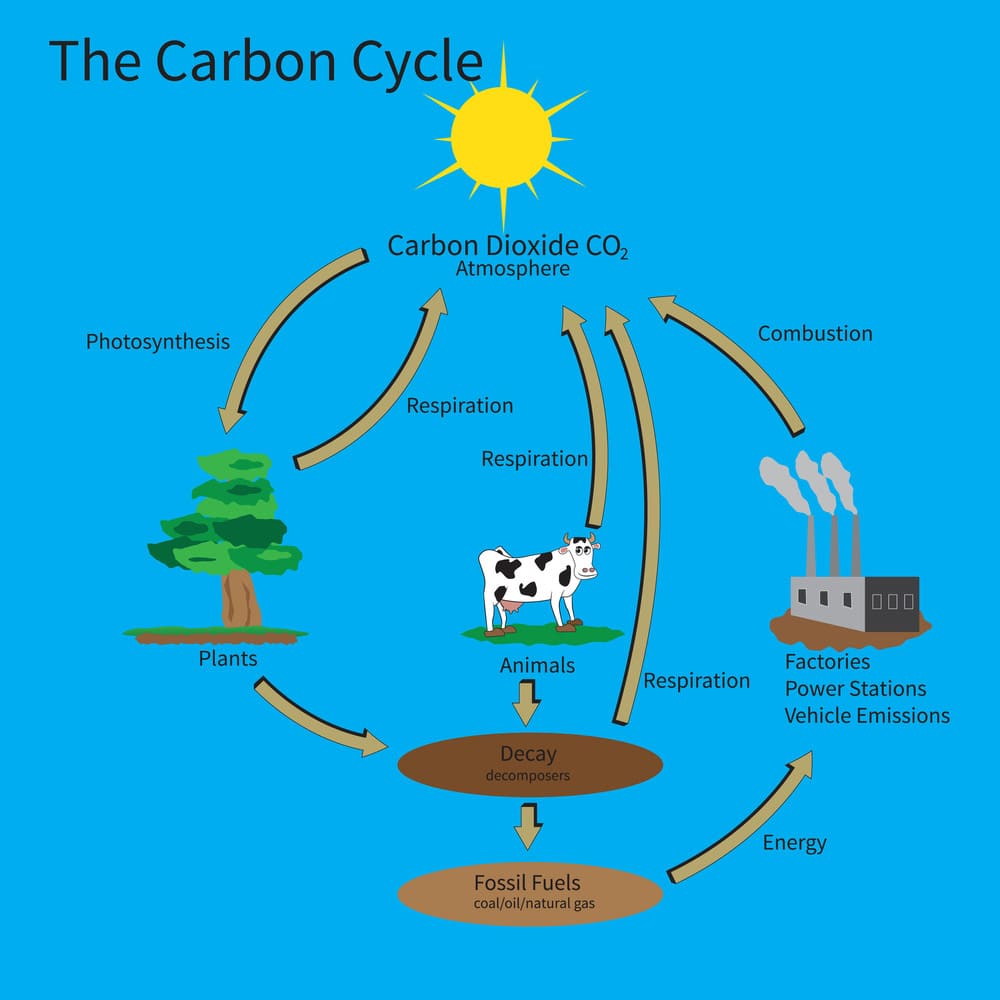
Image: 


Image link: http://www.edinburghgardenschool.com/wp-content/uploads/2016/05/carbon-cycle.jpg


Summary: This week I learned about the carbon cycle. First in the carbon cycle carbon dioxide is in the air which plants absorb for photosynthesis. The plant is then eaten by an animal and then the animal dies. Once the animal dies it's body decays. When the body decays it decays into the ground which makes fossil fuels. The fossil fuels are things like coal or oil. The fossil fuels are then taken to a factory to be made into energy. The factory lets out excess carbon dioxide (CO2) into the air again. The process then starts all over again.

SP6: Constructing explanations and designing solutions
The goal of science is the construction of theories that provide explanations about the natural world.  explanatory power.

Did you explain something through your work?
(This may be when you researched something)

We researched about the carbon cycle by reading a packet on how a dinosaurs breath survives and goes into a cycle.

Sunday, February 19, 2017

Weekly blog 2/19/17

Image: 

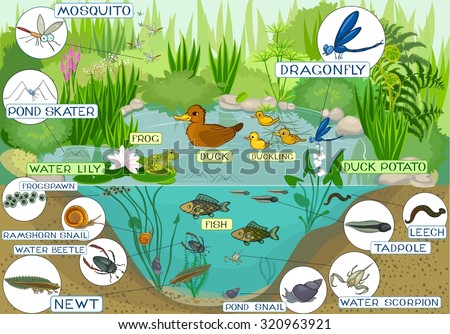
Image link: https://m.shutterstock.com/search?q=ecosystem

Summary: This week we did a worksheet on consumers, decomposers, and scavengers. There are also producers like plants which provide oxygen. We had a substitute and we did the worksheet. On the worksheet we had to catagorize animals and plants into consumers and producers. Some consumers are omnivores, herbivores, and carnivores. Then decomposers like bacteria and fungi decompose dead things which makes the soil fertile. Lastly scavengers are similar to decomposers but they're animals or organisms that eat other dead organisms. Some examples are vultures and hyenas. We also learned about Abiotic and Biotic factors in an environment. Abiotic is a nonliving organism and Biotic is a living organism. Some examples of Biotic are plants and animals. Then some Abiotic examples are water, the sun, and dirt.

SP4: Analyzing and interpreting data
Scientific investigations produce data that must be analyzed in order to derive meaning.


Did you create a graph, table, drawing, etc. of the data you obtained in an experiment?

We created a graph and went outside. When we went outside we labeled things that we saw outside into Biotic and Abiotic.

Sunday, February 12, 2017

Project blog 2/12/17

Image: Image result for fennec fox

Image link: http://kids.nationalgeographic.com/animals/fennec-fox/#fennec-fox-hole.jpg


Summary: This week we presented our super hero projects where we chose 1, 2 or 3 animals into a superhero and create them. Mine was a fennec fox and a weasel. I learned about other peoples superheroes and powers. I also learned that if you eat unhealthy then you can get cancer. In our superhero projects we had to do epigenetics and what our super hero child would be like. I learned that if the mom was unhealthy during pregnancy then the baby would be unhealthy. Also if the child has a high stress job then they could be at risk for maybe depression. I also learned about some animals that people used for their superheroes like the platypus with the power of poison.

Backwards - looking:
On the subject I didn't know much about the animals that I had to choose for my superhero. I also didn't know about punned squares or epigenetics. The only thing I pretty much knew was when we had to improve the villain I already knew some of the body systems, their functions, and what organs were in the system.

Inward - looking:
What I found frustrating about this project was that we had to draw a lot and I'm not very good at drawing. I found everything else fine though because I'm better at filling things in than drawing things. It's also because I didn't really dislike anything about the project.

Outward - looking:
The first grade I would give is an A, then a B+, and lastly a B. I would give it an A because the information on the super villain organs in my opinion was good. Then I would give it a B+ because I think that the epigenetics was good but not very good. Lastly I would give it a B because my drawings looked good but they were also pretty bad in my opinion.

Forward - looking:
I'd like to improve on my drawings and to put more detail on my sentences. I want to improve my drawing because if we do another drawing project then I want it to be better. Then lastly I want to put more detail into my sentences because then they'll be more descriptive.