Sunday, December 17, 2017

Charity fair project blog 12/17/17

Image: 


Summary: This week we worked on something called the charity fair, which is where we create products and sell them for the charity that we're supporting. We need to create a backboard and on the backboard would have a cost and profit, information about our charity, an interactive map, list of materials, charity statistics, company name, an image of our product, product name, and an instructable. We also have to give a presentation about our charity and why people should support it. Something different this year though is that we had to make business cards that had our company logo and name on it. The business card was so people could support our charity without having to buy our product.

Backward - Looking: How much did you know about the subject before you started?
I knew what I needed to to such as what I would do in each class and that we would need to do a backboard and choose a charity. I also knew that we would have to think of a product to sell. This year however, the product had to be related to our charity. I also didn't expect to make a business card or campaign video this year. But this is also the first year I did stress balls so it took me some time to get the hang of making the stress balls. Other than that I knew what we were going to do during the charity fair and how you were supposed to sell to people.

Inward - Looking: What did/do you find frustrating about it?
While preparing for the charity fair what I found frustrating was that my partner didn't do much work, some of our products got destroyed, and even though we planned out where to put everything on the backboard we wasted a lot of room. When my partner didn't do any work I had to do the rest and it took a while. Then when my partner made the prototype they let someone look at it and the prototype broke. Lastly when we were doing the backboard we didn't have much room and it was too late since we already put most of the stuff onto the backboard.

Outward - Looking: What grade would you give it? Why?
A grade I would give our charity fair project is a C+ for creativity, a B- for collaboration, and a B+ overall. I would give creativity a C+ because our backboard was pretty plain and other groups were also doing stress balls, about 3 or 4 more groups. Then for collaboration I did a B- because even though my partner didn't do some work, they still did some work when I asked them to. They also brought the materials when I asked them to, but they wouldn't bring the stuff unless I reminded them to. Lastly I would give a B+ overall because I think that a C+ plus a B- would be a B+.

Forward - Looking: One thing I would like to improve on is...
A few things I would like to improve on is my math, my partner choosing, and my creativity. I'd like to improve on my math because I had to re-grade the cost and profit and I would want to get a good grade the first time instead of regrading it. I also would want to improve on my partner choosing so that when we choose partners at the beginning of charity fair I could get a partner who does work equally. Lastly I would want to improve my creativity because a lot of people were doing stress balls and ours looked more plain then the others. Also because then it would catch people's eye and we could sell more of our products.

Sunday, December 10, 2017

Weekly blog 12/10/17

Image: 

Image link: https://byjus.com/physics/distance-and-displacement/

Summary: This week I learned about scalar and vector quantities. I also learned about distance and displacement. Scalar quantities is how far something went and vector quantities are the same thing but they have the direction that something is going in. An example of scalar quantities is if someone said that the supermarket is 11 miles away from your home. Then an example of vector quantities is if someone said that the supermarket is 11 miles east of your house. Distance is also an example of a scalar quantity because distance also only says how far something is from it’s original position. Displacement however is an example of vector quantities because it’s how far away something is from it’s original position and the direction of where it went.

SP5: Using mathematics and computational thinking
Mathematical and computational approaches enable prediction of the behavior of physical systems along with the testing of such predictions.


Did you perform any math calculations?

Yes we did a lab this week and we needed to add to get a total distance and to get a displacement To get a displacement I would do one length squared and multiply it by another length squared.

Sunday, December 3, 2017

Weekly blog 12/3/17

Image: Image result for manufacturer to retailer


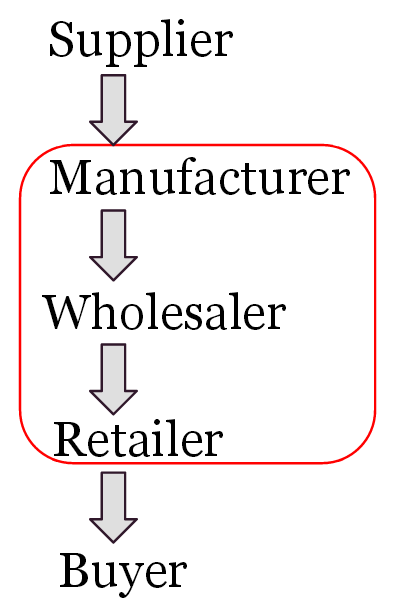
Summary: This week I learned what a carbon footprint is and how retailers get their products. A carbon footprint is when a certain amount of greenhouse gases is released into the air by a specific thing. Some examples of things that would release greenhouse gases are cars, planes, and a train. Retailers and manufacturers use these modes of transportation to get their products and deliver their products. Depending on how long the distance is a certain mode of transportation would be used. An example is if the manufacturers and retailers are in different continents then the manufacturers would use a plane to send the products over to the retailers.

SP5: Using mathematics and computational thinking
Mathematical and computational approaches enable prediction of the behavior of physical systems along with the testing of such predictions.

Did you perform any math calculations?
Yes we preformed math equations to find the amount of CO2 gases that was released based on a certain amount of miles a vehicle traveled. To find the CO2 gases lets say for 11.8 miles I would do 11.8 by .41 to get the amount of CO2 gases released in the air by a vehicle.


Sunday, November 12, 2017

Weekly blog 11/12/17

Image: 


Summary: This week we learned about classification. Classification is when you put something in a specific category. An example is when you put dogs and cats as mammals and when you but salmon and trout as fish. I also learned about different types of classifications such as eukaryotes. Eukaryotes is an organism that has cells that has a cell nucleus. An organism has to have certain traits about itself to be in a specific classification. Like tetrapods which is an organism that has 4 legs and movable joints. A dog would be classified as a tetrapod.

SP7: Engaging in argument from evidence
In science, reasoning and argument are essential for clarifying strengths and weaknesses of a line of evidence and for identifying the best explanation for a natural phenomenon.

Did you participate in a class discussion providing evidence for your answers, and/or used the ACE strategy in your work?

Yes this week we did a google doc about classification and we needed to answer questions using a different number of sources.

Friday, November 3, 2017

Weekly blog 11/3/17

Image link: Image result for whale bones

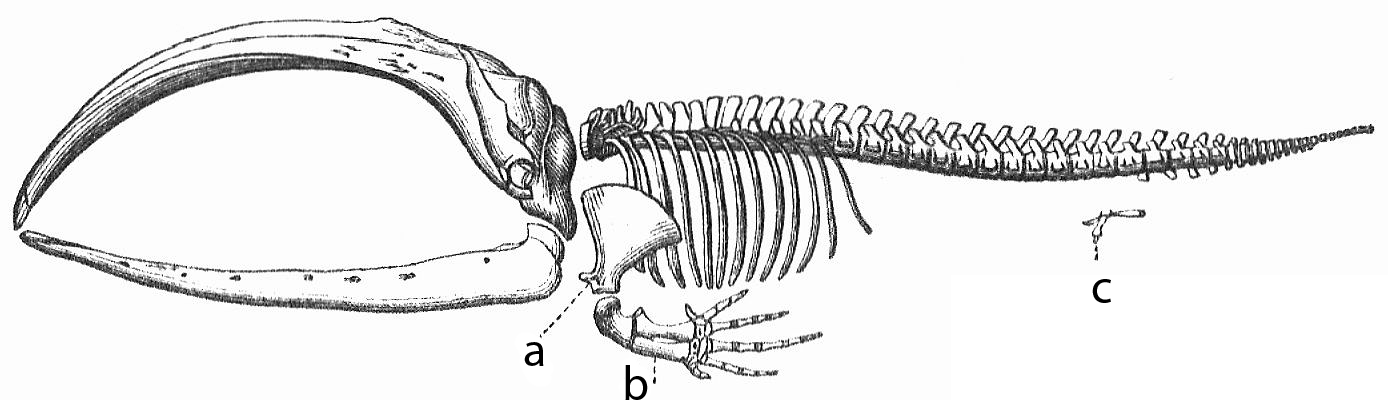
Summary: This week we learned about how scientists find the common ancestor of an organism. There's actually multiple ways such as comparative anatomy and a cladogram. Comparative anatomy is when scientists check the bones of an organism and compare it to the bones of another organism. If they have a similar bone structure or they have a bone that's the same then they could both have come from the same common ancestor. A cladogram is similar except it doesn't just to bones it also does hair and embryos. A cladogram is similar to a graph and a scientist would use this to compare traits of multiple organisms and would see which organisms were most related.

SP4: Analyzing and interpreting data
Scientific investigations produce data that must be analyzed in order to derive meaning.

Did you create a graph, table, drawing, etc. of the data you obtained in an experiment?

Yes because we used a cladogram to see who was most related to a T-rex and we used a graph to record our data.

Sunday, October 29, 2017

Weekly blog 10/29/17

Image: Image result for peppered moths

Summary: This week I learned about peppered moths, their different colors, how they can survive, and how their population decreased. I learned that peppered moths can come in different colors such as the normal color which is white with black spots or just a dark colors. The peppered moths live in trees with a type of fungi in them and depending on the color of the trees the moths can survive or get eaten by predators. If the tree is a light color then the light colored moth would be able to survive better than the dark colored moth. But if the tree becomes a darker shade then the dark colored moth would be able to survive better. Peppered moths can also survive in the winter because their larvae turn into pupae during the winter so that they stay warm. I've learned that the peppered moths are a form of natural selection because nature can choose whether or not they're a dark colored moth or light colored moth depending on their environment or depending on whether or not it'll help the moths survive.

SP4: Analyzing and interpreting data
Scientific investigations produce data that must be analyzed in order to derive meaning.

Did you create a graph, table, drawing, etc. of the data you obtained in an experiment?

Yes in class we played a game where you were a bird and you chose an area where you had to eat as many moths as you could within the time limit. On a google doc though there was data already recorded but you needed to put all that information in a graph. There was 2 sets of data. One for the light forest and one for the dark forest. When you put them in the graphs you had to answer questions while looking at the graph.

Friday, October 20, 2017

Weekly blog 10/20/17

Image: Image result for natural selection


Summary: This week we learned about natural selection and we did an experiment. I understand natural selection more clearly now that we did an experiment about it. Natural selection is when nature selects traits that will help a population of animals survive from predators or the environment. An example is if a species is living in the desert and a trait that they get from natural selection is less fur so that the species doesn't get overheated. I also learned that through natural selection a lot of species of animals and insects are able to survive.

SP3: Planning and carrying out investigations
A major practice of scientists is planning and carrying out systematic investigations that require clarifying what counts as data and in experiments identifying variables.

Did you plan and carry out an investigation?

(Mostly when we do a investigation, lab, or experiment)

Yes we did an experiment about natural selection that included spoons, knifes, and forks. The spoons, knifes, and forks represented species of animals. There was also seeds and buttons that represented a food source for the species of animals. The experiment was that 1 person would be a spoon, a knife, or a fork. At the same time everyone would try to get as much 'food'as they possibly could with their 'species'. This experiment helped me understand natural selection by showing how certain traits in species help them get food. Such as the spoon and fork getting the most food because they both have traits to help them pick up more food. The knife however became extinct since it doesn't have a trait that helps it pick up food. This is like how lions have sharp teeth and claws to hunt down prey but giraffes have long necks to get leaves from high trees for food.